
Lights, camera, school: Information provision though television during COVID-19 times
This paper examines the effects of phone calls designed to encourage viewership of the short telenovela Decidiendo para un Futuro Mejor (Deciding for a Better Future, hereafter DFM) on national television during the COVID-19 pandemic in 2020 in Peru. DFM uses video content to highlight the benefits of education while providing concrete information on wages and financial aid opportunities for higher education. We evaluate the impact of these calls on dropout rates in 2021 through a randomized controlled trial involving over 80,000 families with high school students. Our findings indicate that the phone calls led to a significant reduction in school dropout rates, with intention-to-treat (ITT) effects of approximately -0.6 percentage points—a meaningful impact given the 10.2% average dropout rate in the control group. The effects are stronger for students from schools with higher baseline dropout and poverty rates, with no significant differences based on parental education levels. Our results also suggest that the observed effects are primarily driven by encouragement to watch DFM rather than by the direct impact of the phone calls themselves. These findings underscore the potential of cost-effective interventions to mitigate the adverse effects of major economic shocks on educational trajectories.
To attend the colloquium talk please register using this link.
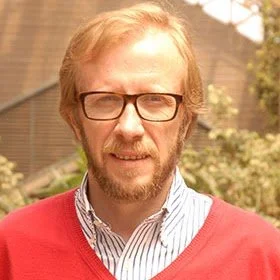
Francisco A. Gallego
Francisco Gallego is a Full Professor at the Economics Institute of the Pontificia Universidad Católica (UC) de Chile, as well as Provost for Institutional Management at UC de Chile and a Fellow of the Econometric Society. His areas of interest are development economics, political economy, and the economics of education. He has worked on educational evaluations focused on the impact of information on parents’ decisions. He holds a PhD in Economics from MIT. Francisco previously served as Co-Scientific Director of J-PAL Latin America and the Caribbean. He has lectured at J-PAL training events and has served on the review board of J-PAL's Post-Primary Education Initiative.